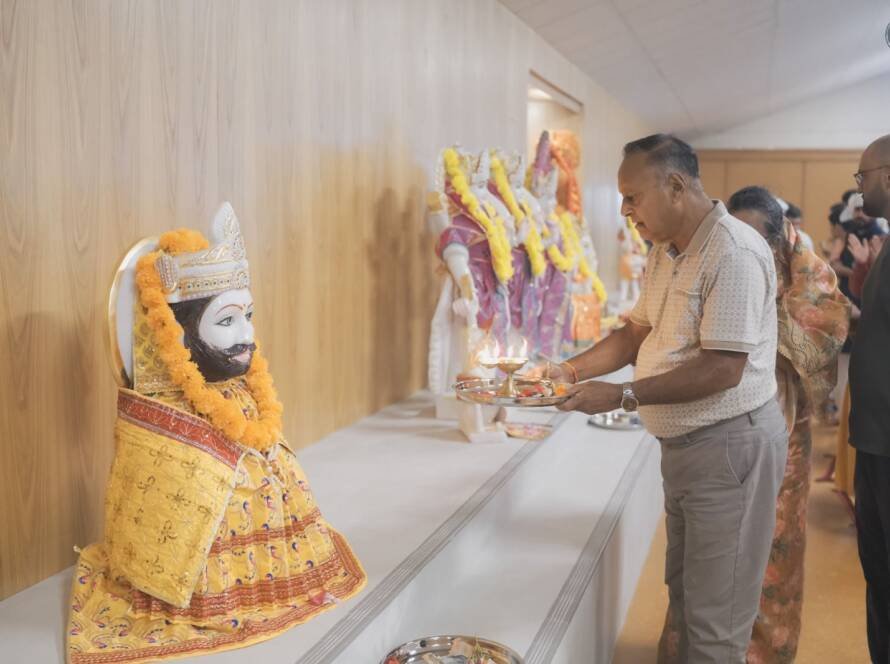


One of the most popular devotional hymns to Lord Hanuman is the Hanuman Chalisa. Written by Goswami Tulsidas, it includes forty verses to glorify the power, intellect, devotion, bravery and selfless service of Hanuman Ji. Since time immemorial, believers have chanted throughout prayer, times of trouble, and during religious events and times when spiritual power is at a premium. Use of Hanuman Chalisa may be interpreted in more than a religious manner but also in terms of discipline, concentration and the attitude of positivity which the ritual of uniform recitation may foster.
Lord Hanuman has been revered exceptionally in Sanatan Dharma as a depiction of undying faith in lord Rama. His personality can be considered as a sign of humility and immense power. The Hanuman Chalisa is an exemplification of these attributes and acts as a reminder that real power holds any significance only when it is filled with faith, wisdom, and service. After reading the verses, we find it easier to recite by understanding what we are reading since we refer to the values that Hanuman Ji depicts as the verse is read.
Among the most prominent people who speak about Hanuman Chalisa benefits, it is possible to mention the feeling of inner strength that believers feel after prayer. Life may be full of confusion, anxiety, stress and emotional strain. Reading a sacred speech one knows might also result in a sense of steadiness and prompt the mind to be mindful of one’s courage as opposed to worrying. The brave nature of Hanuman Ji is a spiritual guide that one may face challenges as long as he/she is determined.
Hanuman Chalisa also goes hand in hand with devotion and concentration. Reciting the verses periodically might turn into a type of meditation. Timing of recitation helps to focus more on the prayer as opposed to daily distractions. This state of attention provide a serene spiritual experience to many of its devotees and a welcome escape out of a hectic schedule.
Among the important Hanuman Chalisa benefits is the encouragement of discipline. When practiced in a consistent manner, devotional practice is stronger. There are also those who say Chalisa in the mornings or evenings, with some especially liking Tuesdays and Saturdays, associated with the worship of Hanuman. A regular spiritual practice can promote patience, regularity of routine and relationships with faith.
Knowledge and wisdom are also brought out in the meaning of the Hanuman Chalisa. Hanuman Ji is not only remembered because of being strong physically but because of being intelligent, excellent communicator, judge, and most importantly, understanding the spiritual aspect. The hymn glorifies such attributes and teaches the followers that strength is pointless without wisdom. The constant consideration of these teachings has the potential to motivate individuals to be more reflective towards challenges.
The relationship of the Hanuman Chalisa benefits with positive thinking is another area. The verses mention again and again that Hanuman Ji is powerful, compassionate, committed and able to counteract such hard situations. Such messages may be encouraging to hear or say and, in doing so, produce a positive mental atmosphere. Instead of focusing oneself on the impossibilities, the believers are called to memory the strength of soul, faith, and the power of endurance.
Another important message that the Hanuman Chalisa conveys is selfless service. Hanuman Ji never exercised his powers on egoism. His power was always devoted to the service of Lord Rama and safeguarding of dharma. It is an important lesson on how to use personal talents responsibly, taught. One of the most effective ways that the devotees can put this principle into practice is that they should assist family members, contribute to the community and do good deeds without any chances of reward.
Reciting of the Hanuman Chalisa together is a common practice amongst many families. Parents and the aged tell the verses to the children, thus imparting familiarity of the Hindu verses to the young siblings. This commonality makes the generation to become connected and helps in upholding cultural heritage. The benefits of the Hanuman Chalisa are not only limited to personal worship but also to the family and community lives.
Another aspect of the Hanuman Chalisa of spiritual significance is found during the worship in temples. Devotees can say it either alone or together in a Hanuman Mandir. Recitation by the group gives a very strong devotional mood since numerous voices are united when it comes to praying. Worshippers can find the experience to be very fulfilling due to the sound of chanting, temple bells, and aarti.
Hanuman Mandir Wellington can be utilized to ensure that Hindu families are attached to Sanatan Dharma even though they are living in New Zealand through devotional practices relating to Lord Hanuman. Temples also offer a great place where individuals can pray, be taught, engage in religious events and expose young children to customary activities. Of course, the Hanuman Chalisa has a significant place in such a devotional setting.
The people who like Hanuman Chalisa also associate the benefits of the Chalisa with conquering fear. An account of Hanuman Ji invariably demonstrates bravery in challenging circumstances. He never hesitated in a big step whether it was in cross ocean, in entry of Lanka, or in taking the Sanjeevani in his hand, as he always had faith in him. Retelling these tales when saying the Chalisa can make one take personal challenges with a more mental mind.
Humility is also strengthened in the prayer. In spite of his supernormal powers, Hanuman Ji always regarded himself a servingman of Lord Rama. This is one of his most admired qualities of humility. Hanuman Chalisa reminds a person that success and power must not make one arrogant. Rather, spiritual development is characterized by gratitude, service and respect of others.
The other important aspect of the Hanuman Chalisa merits is emotional comfort. When times are tough, prayer can offer use of companionship. Devotees can even address Hanuman Ji during times when they are uncertain, lonely, worried or enveloped. Reading a common prayer can bring a feeling of reassurance and enhance the bond one has with religion.
The Hanuman Chalisa can be also applied in the form of gratitude. Prayer is not just help seeking. There are numerous believers who repeat it as a sign of gratitude about blessings, protection, family, health and opportunities. This habit has the potential to help foster a more grateful outlook on daily life.